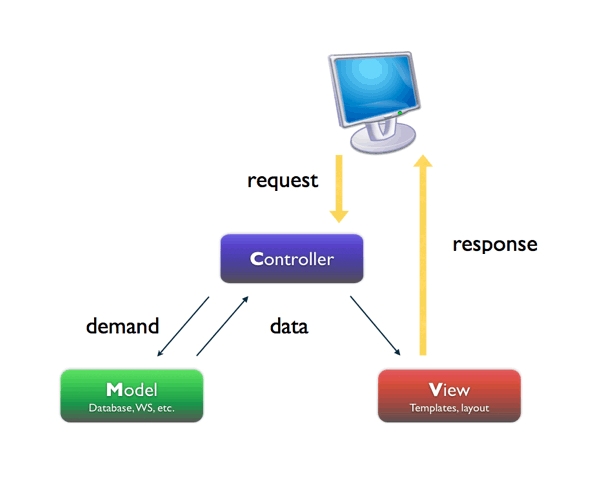
Have you ever wondered how programmers organize their applications to make them easy to understand and maintain? Well, that’s where the MVC pattern comes into play.
Imagine an application like a delicious pizza. MVC divides the preparation of that pizza into three parts:
- The Model: This is like the secret recipe for the pizza. It contains all the ingredients and instructions to make it perfect. In the programming world, the Model holds all the important data and the rules for handling it. It’s the brain behind the application, but it doesn’t know how the pizza looks or who’s eating it.
- The View: The View is like the plate on which the pizza is served. Here, the pizza is presented in an appetizing way. In software, the View displays information to the user in a beautiful and understandable manner. But just as a plate doesn’t cook the pizza, the View doesn’t know how the data works.
- The Controller: The Controller is like the chef who prepares and serves the pizza. It listens to what the customer (user) wants and communicates with the Model to get the right ingredients. Then, it ensures that the pizza is served on the right plate (the View). The Controller is the active part that makes everything work without messing up the Model and the View.
So, why is this important? MVC makes your code easier to understand and change. If you want a new pizza (change the View), you don’t need to redo the recipe (the Model). And if you want a different recipe (change the Model), you don’t need a new plate (the View).
In summary, the MVC pattern is like having an organized and efficient kitchen for preparing your software applications. It divides tasks, avoids chaos, and lets you serve delightful experiences to your users. Bon appétit in your programming! 🍕💻